Tuesday, September 17, 2013
An August Trip to Greece and Bulgaria - 2013
Throughout the spring I was conscious of the rapidly approaching summer and the need to find something to do with myself during the long emptiness of the student-less month of August. Staying here on my own is not really an option and as they say travelling broadens the mind. But to where?
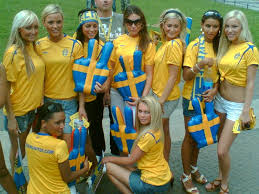
Scandanavia continues to catch the eye for some reason. I'm never been there and clearly August is the best time to go to avoid the cold and in addition there are four countries all easily packed together so it would be a big jump in my quest to see every European country. If I were younger maybe but somehow it fails to inspire me and it's expensive and they'll all speak english so where's the challenges, so I don't know if it'll ever happen...
Scandanavia continues to catch the eye for some reason. I'm never been there and clearly August is the best time to go to avoid the cold and in addition there are four countries all easily packed together so it would be a big jump in my quest to see every European country. If I were younger maybe but somehow it fails to inspire me and it's expensive and they'll all speak english so where's the challenges, so I don't know if it'll ever happen...
| The Book.... |
So how to get there exactly? And could I combine the trip with my longstanding desire since childhood to use a Brindisi-Greece ferry? Well, after months of planning which for the planner is half the fun but boring for the reader, I had the flight to UK, another on to Bari and the ferry ticket from Brindisi-Patras in Greece. In total 1 ferry, 1 train, 2 hirecars, 5 flights, 15 hotels pre-booked and an itinerary that included Olympia, Sparta, the Mani of course, Delfi and Athens and Sofia and the western half of Bulgaria.
| A Mani Tower House |
Ok, as the Mani was the inspiration for going to Greece in the first place the initial picture must be from there. As I said before everyone in the Mani lives, or rather used to live - things change fast these days - in a tower block but in the Mani it's one tower per family. So here's a nice shot of one of the Mani tower blocks in good condition. Because most of them were in a ruined state in Fermor's time in 1958 and sadly it's even worse now. There's some new ones and even some made into hotels but to be honest, most are sad, crumbling ruins.
| A Mani Tower Village |
But nevertheless, very often there will be a whole village of these towers, where in the old days because of all the blood feuds, even within one village, they would often maintain a state of war and shoot at each other from their tower. It's all quieted down now of course, because they have all gone off to live in Athens. Here's a distant view of a whole village full of towers. It is, of course, the famous, almost uninhabited, Vathia.
| Cape Matapan, Greece |
Now here's the only picture I can find of what the headland called Cape Matapan, at the end of the Mani looks like. It's the southern most part of Europe, well apart from Tarifa, in Spain.
And of course half the fun is just that - finding the damn things as they are invariably hidden away down twisting and narrow country lanes that resemble a maze and you get the feeling that once off the main road you'll never find your way out again.
When you do get to Athens you'll find one of these churches right in the middle of a pedestrian precinct so I guess that may explain why out in the Mani nobody bothers much to point them out to ignorant foreigners. So you arrive with your 25 year old guidebook book and you find that things have changed somewhat, the main thing being that now they are ALL locked. So you invest in a new up-to-date guide and get to work and a couple of hours of searching and map-reading and investigation, you discover the obvious. That all these English authors pointing out the careless habits of Greeks concerning their treasures has resulted in frustration because you eventually arrive at your goal only to discover the damn place is locked. Your up-to-date guide does in fact give you the name of the man who (supposedly) holds all the keys but he's (sometimes) miles away in the museum in Aeropolis. Above is one of them, a church not the key-holder.
| Orlando Bloom and Diane Kruger pretending to be Paris and Helen |
And I mustn't forget Aeropolis, the largest town in the Mani, which is where in 1821 the Greek Revolution began in an attempt to push the Turks of the Ottoman Empire out of Greece.
BUT BEFORE ALL THAT.....
On the way down to the Mani I had the long awaited BRINDISI-GREECE ferry trip of course and a right nightmare it was too. As always I opted for a reclining seat but this turned out to be a grave mistake as they were located in the cinema cum TV room. The TV stayed on all night playing old, obscure Italian movies and much of the lighting stayed on in sympathy and in addition the pathetic air conditioning proved to be completely inadequate in coping with the warm night and with the heat generated by all the sweaty bodies.
Thankfully morning finally arrived and we could enjoy the beautiful Albanian and Greek coastline. Once on land, I caught a taxi to the car hire firm where an upgrade gave me a Hyundi i20 and I hit the road. The first days driving proved fairly easy - a simple coast road to a major town and a turnoff to the "Ancient Sanctuary of Olympia".
| This is Olympia.... |
The following day a simple cross country trip to Sparta was planned. But as everywhere in eastern europe the provision of road signs is not yet an accepted science and one has to use a bit of initiative. After a few mistakes and confusion I soon realised that the main roads in Greece are a lot smaller than most places and the key is to stick to the ones with a white line or invariably a double white line. These roads are the big red ones on the map and it's best to ignore your past driving experiences. Nevertheless, I found myself constantly checking my map every 20 minutes because I couldn't really believe that this was the main road.
During the evening I found the enormous amphitheatre (Roman...) in the ancient site of Sparta. What a shame that nobody has bothered to excavate it. You can appreciate its size from the protruding stonework and steps but as its overgrown and covered in weeds and grass its not so impressive. There was a note of contempt in the hotel receptionists voice as he told me "it's Roman"; maybe that's why its been ignored.
After my first amphitheatre, the following morning I climbed my first hill top town in the shape of Mystras ( or Mistras) home to at various times the Franks, the Venetians and the Ottoman Turks and complete with an enormous castle at the top.
After Sparta it was the Mani as we have seen and after that I turned north to see Nafplio, Mycenae, Epidauras, Delfi, Thermopylae and finally Athens.
| The Lion Gate at Mycenae |
So here's the famous Lion Gate at Mycenae - there's two lions carved over the door hence the name. It is the main entrance to the city and is reckoned to have been built around 1350 BC. It doesn't look restored but would I be cynical if I remarked that it's strange that its the most impressive thing at the site as the rest of the town is just a series of excavations and there is really not much to get excited about. This is where the German archelogist Schliemann found what he believed to be the death mask of Agamemnon, that gold mask we've all seen pictues off, but sadly it wasn't.
| The Amphitheatre at Epidaurus |
And not far away is the famous amphitheatre at Epidaurus, supposedly the best surviving amphithreatre in the world and very impressive it is too. I'm was told it was Greek (well the bottom 34 rows, the top 21 rows were added by the Romans), but after the Roman amphithreatre at Sparta, the Venetian castle at Nafplio and a roofless Partheon thanks to Turks and Venetian fighting each other in 1689 and blowing it up you just have to ask. It's clearly not been restored and one wonders how it has survived intact when all the other monuments, buildings and structures throughout the country have been destroyed, looted or carried away.
| Tholos in the Sanctuary of Athena, Delfi, Greece |
Across the road is the Temple dedicated to Apollo wherein resides the Oracle. The ancient Greeks believed that Delfi was the centre of the world and was the place where they went to hear the Oracle give them advice regarding the problems in their lives. Somewhat bizarrely I overheard a couple of (american) tourists explaining that this ancient need for advice was a result of their not yet being given the Scriptures. Anyway, whatever your persuasion it is a very large impressive complex built on the side of a mountain, with the main temple, sanctuaries, treasuries, an amphitheatre, and a 300 yard stadium strangely enough at the very top of the complex. And to prepare yourself for the sights you can first call in to see the splendid museum.
| Delfi Amphitheatre |
The whole series of buildings are very high up and prone to earthquakes and rock-falls. But it's a fascinating place with stunning views over the mountains and valleys and then down to the sea in the distance.
| Site of the Battle of Thermopylae, Greece |
So on to Athens. I had one night there before flying to Sofia and it was a revealing one. After seeing the city surrounded by good modern roads, flyovers, underpasses and train stations everywhere you look I was surprised at the filthy condition of the streets and the dirt in the very centre; Its revealing that the tourist area Placa where all the souvenir shops and restaurants are is in very good nick while a half mile away where you'll find the shops of Zara, Mango etc seemed to me to belong in Africa, with apologies to my African friends of course. So whole the fashion shops get rich and don't give a toss about their surroundings, the country goes into hock building infrastructure to get people there....
BULGARIA
So its off to Sofia and a quick 9 day tour of Bulgaria which when I went I had assumed was the poorest country in the European Union but in fact that dubious honour falls to Moldova and Bulgaria is only the 10th on the list and there's a brand new airport only a couple of years old just to prove it. Bulgaria was a part of the Soviet block until 1989 and has always been a great friend of Russia, judging from all the monuments and churches dedicated to what is referred to as "The Liberator".
| Saint Alexander Nevsky Cathedral, Sofia |
Above right is the most important structure in the city, the Saint Alexander Nevsky Cathedral, named after a russian orthodox saint of the 13C and dedicated to all the Russians that died in the Russo/Turkish wars in 1877/78 that freed Bulgaria from Turkish occupation..So that's why they love Russia.
| Typical Bulgarian Roadsign |
Anyway, Bulgaria seems a friendly place and a helpful piece of advice from the car-hire man in the car park the following day, "Follow the signs to Varna".........Because, as far as Western Europeans are concerned it's either Varna or Burgas. All other options are written in the unspeakable and unreadable Cyrillic alphabet and you'll need a good bilingual map to decode the infrequent signposts. And bear in mind that the translation to latin characters can be "adjustable".
And then there was an accident. And not a small one either. Every road East seemed to be packed solid with stationary cars with only a glimpse of police roadblocks seen from afar. After the demonstrations I had seen last night it did cross my mind that maybe this is what a political coup feels like but my fears were unfounded and eventually after an hour of crawling progress we reached a junction where most people seemed content to wait at the (closed) motorway sliproad. Others, me included, opted to try the still moving "B" road disappearing into the country and finally we reached another motorway sliproad with "No Entry" signs but what the hell and we all duly ignored it. God only knows where it was taking me but at least it was eastwards.
| The Opera House, Ruse, Bulgaria |
The next day, off to the old capital, Veliko Tarnovo - in Bulgarian Велико Търново - and as you guessed this was where the driving got really difficult. No sign of Veliko Tarnovo on the road signs just somewhere called В. Търново so frequent stops were needed to refresh the memory as to Cyrillic spelling. But I managed to find the famous Shipka Pass where the Russians (again) and the Bulgarians held firm against an overwhelming Turkish army in 1877 during the Russo/Turkish War.
I can't say I liked Veliko Tarnovo very much. Maybe caused by an inability to find my hotel ( I just couldn't get orientated in this valley town) and being a long walk from the centre and a hotel room with no decent lights to read by and then the receptionist warns me that they can't connect to their bank so want cash in payment. Well, That was it, I cancelled the 3rd night of my planned stay and returned the 100k to Ruse and back to my nice City Art Hotel.
| Roman Amphitheatre in Plovdiv, Bulgaria |
Anyway, a very nice old town with narrow, nicely labelled streets, and old restored buildings. There's a very nice old Musuem in a restored house with artifacts from the April Uprising in 1876 that after two years finally gave Bulgaria its independance from the Turks.
And a few hundred yards away down the hill is a Roman Amphitheatre (above) in very good condition and further down under the main street lies the end of the old Roman Stadium. Very impressive and look, a very nice bookshop.
| Rila Monastery, Bulgaria |
The night before, I stayed in the bleak, empty ski resort of Bansko complete with thunder and lightning although I was fortified by my best meal of the trip.
The impressive, and enormous, Monastery was built by the followers of Saint Ivan who ironically lived in a cave nearby.
Even though I was early, there were thousands of tourists and nowhere to park and it's impossible to show you a good picture of it because it's so big. A huge rectrangle (3000 sq m) with a church and a medieval tower in the middle and the whole four sides and the church are all outlined in a striking black and white paint, zebra style. It's fairly new 1840ish as the original burnt down and there are stunningly, beautiful frescos on the outside of the church while others on the inside have been spoiled, ironically by the Bulgarian habit of selling candles to the faithful which are then burnt inside the nave. The blackened walls are a testimony to this folly. And it's the same in the huge Saint Alexander Nevsky catedral in Sofia.
Trip Highlights
Best Hotel - No clear winner but a Gold Star to the three best. The Karavi in Aeropolis was a large downstairs flat in the garden rather than a hotel room and it came complete with a patio and very friendly hosts. The City Art Hotel in Ruse was also a gem set in a lovely restored building with large rooms and very modern facilities and a balcony and was so good I stayed there twice. And to give you some idea of the prices in Bulgaria, it costs 29Euros a night. And I can't really forget the Acropole in Delfi. A nice room with a four-poster bed and with a large balcony and a fantastic view over the valley. Room 414, you won't be disappointed.
| The Kalamata to Sparta Highway, Greece |
But on the other hand there's also the very scenic roads up, and down, the mountains in the Mani complete with 1st gear uphill hairpin bends and stunning views from the top.
And then again, it was rather fun racing the lorries on the A road between Ruse and Veliko Tarnovo.
Best Beer - The standard beer in the Peloponnese is Amstel, 2.50 in greek euros. Yes, Greece isn't so cheap.
Best Cappuchino - Normal coffee with milk is largely unknown in Greece but after my night in Bari I seemed to be stuck in "A cappuchino, please" mood for the first few days. I got the feeling that this request was a bit upsetting and its common to be met with a raised eyebrow and a "I'll try" expression and the results can be interesting. As for the locals they drink either the small greek coffee ( "We only have Greek Coffee..... (sir, optional") or the large cold coffee with various additions of cream or ice cream. But the two best Cappuchinos that I had were in a large filling station (coming and going) on the road to Monemvassia.
By the time I had got to Bulgaria I had given up asking for a Cappuchino so settled for an Expresso.
Best Bookshop - This was set to be the two floor shop in Plovdiv, Bulgaria, but during the last couple of days of the holiday I found a better one in Sofia, "The Greenwich Book Centre" full of a good selection of up-to-date english books. This was a marvellous place on two floors with a lovely coffee bar where you just had to sit and read the book you have just bought.
Best Meal - All that living on ice cream and greek yogurt doesn't leave a great competiton here but the best meal was without a doubt the tasty "chicken in Bulgarian sauce" - a snap at 5.50 euros with beer and dessert - in the hotel in Bansko, the only hotel that I didn't prebook, because the prebooked one proved impossible to find in a town full of Bulgarian Cyrillic roadsigns...
But Did You Learn Anything? - Well, when you travel through countries you tend to pick up the history of that country so what you learn is that the first king of Greece was in fact a German, King Otto, as recent as 1842. Revealing to realise that the country that gave us democracy therefore has only had 7 kings while the British have had something like 52. Maybe that helps to explain something.
And while we remember the Norman Conquest as our "only" invasion it's important to remember that most countries, in the east anyway, have had numerous invasions and conquerors and have had to fight for their freedom in their recent history.
 |
| Gladstone |
A Discovery? - Well, although I lived on Bulgaria and Greek ice cream for 3 weeks and enjoyed the Greek iced coffee, Frappé, the main discovery has to be greek yogurt with a good dollop of fruity jam. I found a wonderful shop in the tourist area of Athens where they only sold the yogurt and it was delicious and my gratitude was clearly significant because when I went back for more the following day, the assistant recognised me with a "Hello again"..
A Surprise - Because of all the economic problems in Greece and the inforced austerity measures to reduce spending I had expected to see some poverty and hardship in Greece but no it wasn't in view anywhere. As you have read I travelled quite a bit to big cities and to country areas and if this is what they call austerity then bring it to Spain. The bars, terraces and restaurants were full, the cars weren't slowing down to save petrol, all the buildings in Athens had their lights on, the fountains were working and only a couple of beggers in Athens. The biggest statement of the lifestyle was in Gerolimenas, a small seaside village in the depths of the Mani. It was sleepy Sunday and as far as you could get from the buzz and bustle of Athens. What on earth was I going to do here for three nights I mumbled to myself into my beer.
But then a woman in theatrical custom walked past and strolled into my bar. And then a couple more. And then a pirate swinging his cutlass ambled past. And suddenly the place was alive with actors and actresses, lighting and sound equipment, control desks, cabling and loudspeakers. All set up on the tiny beach next to tables and chairs for the public. And what a spectacle. Floodlights on the cliffside, searchlights and exploding boats catching fire, fireworks at the edge of the quay. Dancing girls, sword fights and the rescue of drowning people from the burning boat. Magic. And clearly, no expense spared. A wonderful evening.
And of course, I shouldn't forget the friendly, astute Frenchman in the Bari Train Station bar who was off to Bar (in Montenegro) that night by ferry. Shame he couldn't make the group photo....
How Many Times Did You Get Lost? - Well, there were times in Bulgaria where I didn't have a clue where I was and occasions when I discarded the map and got out the compass. But the only problem I really had was in trying to find the way to Sofia airport to leave the hire car. Sounds easy but its not as there are no signs and its quite small. So you have drive around this city avoiding the cars and buses while staring at the skies, checking the compass again, and hoping you can spot a plane coming in to land.
How many Stupid things did you Do? - Well, the most stupid was to leave my back-pack with vast amounts of dosh and my passport on the terrace of a bar in Aeropolis for 10 minutes while I strolled off to the car. There's probably more but I can't remember...........
If you are curious to find out more about Patrick Leigh Fermor, here's a review of his last book; the story of the final miles of his historical walk to Constantinople which was published just last week. http://www.independent.co.uk/travel/news-and-advice/patrick-leigh-fermor-profile-glitteringly-told-impossibly-romantic-unrepeatable-today-8816750.html
So which place would have been P's favorite? - Well, I guess she would have liked the little town of Gerolimenas with its bay and its beach. And would she have gone for a swim? Ah, alas we'll never know..


